
Hobart Gutter Guard Co Blog
Solar Panel Skirting in Hobart: Materials, Installation, and Warranty Impacts
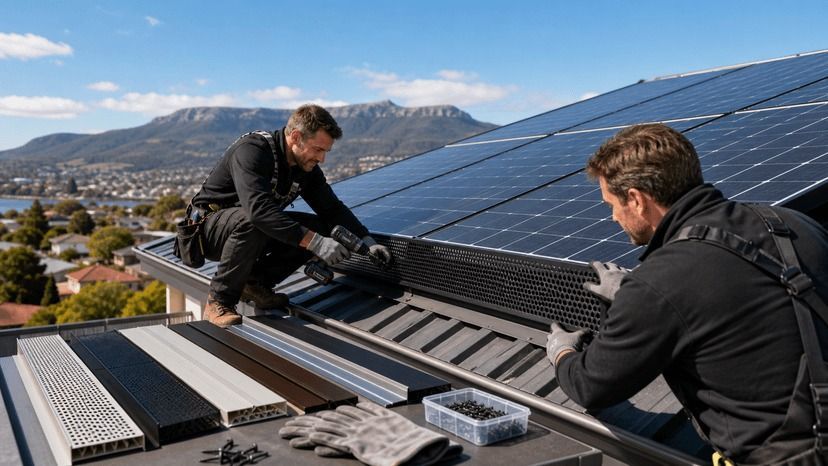
Protect Your Solar Investment Before the Next Storm
Solar panels are a major asset, and most Hobart homes now see them as part of the house, not just an add-on. What many people miss is that the space under and around those panels can quietly turn into a problem area for birds, debris and water. Solar panel skirting in Hobart is about protecting that whole setup for the long term.
When we talk about skirting, we are really talking about asset protection. Done properly, it helps protect your roof surface, wiring and panel performance across the 10- to 25-year life of your system. It is less about cleaning and more about keeping your roof and solar working safely and efficiently.
This guide is designed as a Comparison Guide and Technical Explainer for Hobart homeowners. We will run through:
- How hidden risks develop around your panels
- Which skirting materials stand up in Tasmanian weather
- How installation methods affect safety and warranties
- Before and after asset protection case studies
- A safety checklist to use before you buy skirting
Local Tasmanian-owned specialists understand Hobart’s wind, salt air, ember risk and bird issues in a way interstate or DIY options often do not.
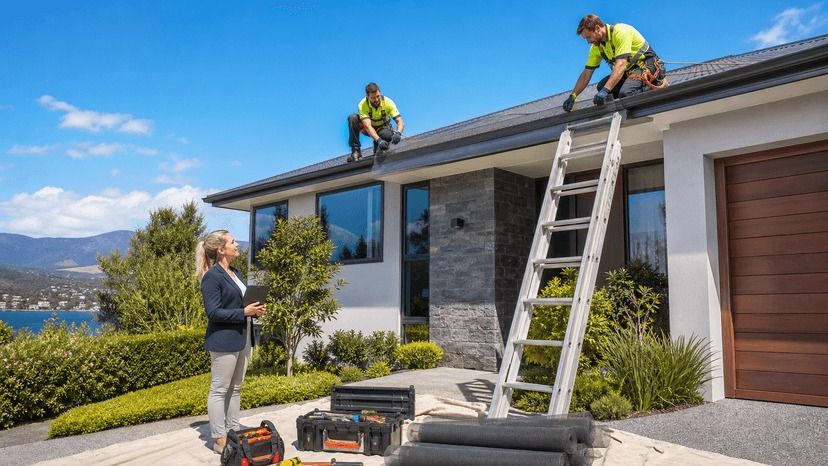
Recommended visual: A hero image showing a Hobart home with solar, gutter guards and skirting clearly in place, emphasising a neat, protected roofline rather than a cleaning scene.
Hidden Risks Around Your Solar Panels No One Mentions
(Problem/Solution Overview)
Problem: Unprotected Gaps Under and Around Panels
The space under your solar array can look harmless from the ground. Up close, it can be a different story. Leaves, gum nuts and small branches can be blown under the panels and get trapped along the edges, especially if you have trees nearby.
Winter storms and strong winds push debris into every gap. Over time you can end up with:
- Piles of dry leaves packed under the panels
- Blocked drainage paths along the roof sheets or tiles
- Damp, rotting organic matter sitting on your roof surface
Birds and possums also love these sheltered spaces. They bring in nesting material and chew on anything that gets in their way, including cables. Common issues include:
- Chewed or exposed solar wiring
- Bird droppings that can speed up corrosion on metal roofs and frames
- Nests that block water flow and cause water to back up under flashings
There is also ember risk during bushfire conditions. Trapped dry debris under panels can behave like kindling. Even in suburban Hobart, where properties back onto reserves or bushy areas, this risk is worth taking seriously.
Solution: Purpose-Designed Solar Panel Skirting as Asset Protection
Quality skirting creates a physical barrier around your solar array that:
- Blocks birds and pests from accessing the space under panels
- Reduces leaf and debris build-up along panel edges
- Helps keep drainage paths open so water can run off as designed
- Lowers ember risk by preventing dry debris from accumulating under panels
- Protects exposed wiring from claws, teeth and weather
A powerful visual comparison is a roof with birds nesting under panels, wiring visible and debris piled in corners, next to a clean, skirted system where you can see clear roof surfaces and protected cable runs. That is the difference between a hidden hazard and a protected asset.
Recommended visual: Side-by-side photo: Left, debris, nests and visible wiring under panels; Right, same roof after skirting installed, clear roof surface, neat mesh barrier and protected cables.
Choosing Long-Lasting Solar Panel Skirting Materials in Hobart
Not all skirting is created equal. The cheapest options usually look fine on day one, but Hobart’s weather will quickly show up any weaknesses. Below is a simple Comparison Guide to the main material types.
Solar Skirting Material Comparison
Material Type
Performance in Hobart Conditions
Asset Protection Pros
Potential Issues / Cons
Lightweight plastic mesh
Poor in strong UV, salt air and wind
Low upfront cost; easy to cut
Can warp, crack or go brittle in a few seasons; gaps open for birds and debris; shorter lifespan than panels and roof
Thin generic metal strips or mesh
Moderate performance; better than plastic
More durable than plastic; some wind resistance
Can twist or pull away in high winds; sharp edges may rub on panel frames or roof coatings; may not match system lifespan
Premium aluminium or steel mesh (gutter-guard style)
High performance; suited to Tasmanian climate
Stands up to UV, salt air and temperature swings; handles regular wind gusts; can match lifespan of solar and roofing; available in ember-rated options
Higher upfront cost, but geared to long-term protection rather than short-term fixes
Ember-rated aluminium or steel mesh
High; designed for bushfire risk zones
Acts as part of a broader ember-guard system around roof edges; helps reduce dry debris build-up under panels and in gutters
Must be correctly specified and installed to meet relevant standards
Plastic mesh is often sold as a quick fix. In Tasmanian conditions with strong UV, salt air in coastal suburbs and regular high winds, plastic can warp, crack or go brittle after only a few seasons. Once it bends out of shape, gaps open up and birds and debris are straight back in.
Thin metal strips are a step up, but if the metal is too light, it can twist or pull away under wind pressure. Sharp edges can also be a problem if they rub against panel frames or roof coatings.
Premium aluminium or steel mesh systems, especially those designed like proper gutter guards, tend to perform far better for Hobart homes. They:
- Stand up to UV and temperature swings
- Cope better with salt air and regular wind gusts
- More closely match the lifespan of your solar panels and roofing
Ember-rated mesh can also be used as part of a broader roof protection plan, giving added peace of mind in bushfire-prone pockets.
Recommended visual: Three-sample comparison photo: Left, flimsy plastic mesh; Middle, thin metal strip; Right, robust ember-rated aluminium/steel mesh, each labelled with a short "Good for / Not ideal for" caption.
How Installation Affects Safety, Roof Integrity, and Warranties
Even the best skirting material can cause trouble if it is installed the wrong way. How the mesh is fixed to your panels and roof matters for safety, drainage and warranties.
Common install methods include:
- Clipping to the panel frames
- Screwing into roof sheets
- Fixing into roof tiles or flashings
Drilling into solar panel frames or mounting points can risk voiding the panel manufacturer’s warranty. Likewise, putting new holes in metal roof sheets or tiles can affect builder or roof warranties and create new leak points if not sealed correctly.
Skirting needs to block bird access, but it must not trap water. Small design details, like the shape of the mesh and how it sits on the roof profile, help keep gaps sealed for birds yet open enough for drainage. Poor airflow and standing water can lead to rust on metal roofs, mould growth and rot on older structures.
When solar skirting, gutter guards and roof flashings are planned together, they can work as a single protective system along the whole roof edge. This joined-up approach reduces weak points and keeps both your gutters and your solar array safer.
Recommended visual: Annotated diagram of a roof edge showing panels, mounting rails, skirting, gutter guard and flashings working together as an integrated barrier.
Safety Checklist: Before You Install Solar Panel Skirting
Use this Safety Checklist when talking to any installer in Hobart to keep the focus on long-term asset protection, not just a quick tidy-up.
Roof, Panel and Warranty Protection
- Are they avoiding drilling into the solar panel frame and mounting points?
- Will their fixing method preserve your solar panel warranty?
- Are all fixings properly matched to COLORBOND or tile roofs to avoid corrosion?
- Are any new penetrations (if unavoidable) fully sealed and guaranteed against leaks?
Drainage and Airflow
- Is there still good airflow under the panels after skirting is installed?
- Can water run off the roof and under the array without pooling?
- Does the mesh profile allow water to shed rather than collect along the edges?
Fire and Ember Risk
- Is ember-rated mesh recommended for your specific location and risk profile?
- Does the skirting link with any ember guards or gutter protection already in place?
Bird, Pest and Debris Control
- Are access gaps for birds and possums fully blocked around the array perimeter?
- Is the mesh gauge fine enough to stop nesting material entering under panels?
Workmanship and Guarantees
- What warranty and workmanship guarantee applies to the skirting itself?
- How long is the system expected to last in Hobart’s conditions?
Recommended visual: Simple checklist graphic or infographic summarising the key safety points, positioned alongside a photo of a safe, professionally skirted solar array.
Before & After Case Studies: Hobart Homes Protected Long Term
Case Study 1: Leafy Suburb Weatherboard Home
Before: Hidden Risks and Frequent Clean-Ups
- Birds entering from the panel edges
- Loose wiring visible on the roof surface
- Gutters overflowing during heavy rain due to nesting material and leaf build-up
- Regular need for roof and gutter cleaning just to keep things functioning
After: Integrated Asset Protection System
After fitting proper gutter guards and solid metal skirting as one system, the same home has:
- No access gaps for birds along the panel edges
- Wiring enclosed and protected from claws and teeth
- Clean gutters with water flowing off the roof as designed
- Less need for reactive cleaning because debris is kept out in the first place
Recommended visual: Side-by-side before/after photos focusing on panel edges, gutters and visible wiring.
Case Study 2: Bush-Adjacent Property with Heavy Leaf Fall
Before: Elevated Ember Risk and Damp Roof Surfaces
- Thick layers of leaves trapped under the panels most of the year
- Panel edges catching windblown debris every storm
- Concern about embers lodging in dry material in hot conditions
- Damp, shaded roof areas under panels contributing to moss and early surface wear
After: Ember-Aware Roofline Protection
After using ember-rated mesh for both gutter guards and skirting, the result is a continuous barrier around the roofline:
- Leaf build-up is kept out from under the panels and out of gutters
- Less chance of dry piles of debris acting as kindling during bushfire conditions
- Roof surface can dry more quickly, supporting longer-term roof health
- The system is set up for long-term roof and wiring protection rather than constant clean-ups
Side-by-side photos of each roof before and after, clearly showing the neat skirting and matching gutter protection, help highlight that this is asset protection, not just a tidy-up.
Recommended visual: Two-panel before/after set: wide shot of the roofline plus a close-up of the panel edge and gutter intersection.
Questions to Ask Before You Buy Solar Panel Skirting
Before you commit to any skirting system, it helps to have a clear checklist of buying questions. These keep the focus on long-term roof and solar protection.
Ask each provider:
- What material is the skirting made from, and how long should it last in Hobart’s conditions?
- How is it fixed to the panels and roof, and will that method protect my panel and roof warranties?
- Is the skirting compatible with ember guards, bird-proofing and gutter guards as part of one integrated solution?
- What warranty and workmanship guarantee applies to the skirting itself?
- How does the system improve asset protection compared to basic cleaning or ad-hoc bird-proofing?
It is helpful to think about the total roof and solar investment rather than one product at a time. When quality gutter replacement, gutter guards and solar panel skirting are planned together, they can:
- Support the life of your roof structure and surface
- Keep wiring safer from weather and animal damage
- Help your solar system perform more reliably over the long term
As a Tasmanian-owned specialist, Hobart Gutter Guard Co focuses on solutions that suit local conditions, from coastal salt air to leafy suburbs and bush-adjacent properties. Solar panel skirting, when chosen and installed with care, becomes a key part of protecting both your roof and your solar investment for many years to come.
Recommended visual: Closing image of a Hobart home at dusk with a protected solar array and gutters, reinforcing the idea of long-term investment and asset protection.
Get Started With Your Project Today
If you are ready to protect your solar investment and improve efficiency, we can help you get set up with professional
solar panel skirting in Hobart. At Hobart Gutter Guard Co, we’ll assess your roof, explain your options and provide a clear, no-surprises quote. Reach out today to book an inspection or ask a question using our
contact us form.

Get a Free Measure and Quote
- No More Cleaning Blocked Gutters
- Keep Out Birds, Leaves & Debris (100% Bird Proof Gutters)
- Protect Your Gutters & Home From Costly Water Damage and Fire Threats
- Gutter Guard & Ember Guard
- Free Gutter and Solar Panel Clean With New Installs