
Hobart Gutter Guard Co Blog
Beyond Cleaning: Comparing Leaf Guard Systems in Tasmania

Protecting Your Roof, Not Just Cleaning Your Gutters
Gutters in Tasmania work hard all year. Autumn leaves pile up in Hobart and Launceston, winter rain hits hard, and in the hotter months many homes face ember risk from bushfires. Your roof and gutters are not just there for looks. They protect the whole structure of your home.
When we only think, "I should clean the gutters", we miss the bigger picture. The real goal is to protect one of your biggest assets so it lasts longer, stays safer, and holds its value. Modern leaf guard systems in Tasmania are about roof health, fire protection and peace of mind, not just spending less time on a ladder.
In this article, you’ll find:
- A clear comparison guide to common gutter and leaf guard options
- Before and After case studies with side‑by‑side problem vs improvement descriptions
- A simple problem/solution style explainer on why gutters fail in Tasmanian conditions
- Cost and asset‑protection thinking
- A practical, ready‑to‑use roof and gutter safety checklist
Why Gutters Fail in Tasmania’s Harsh Conditions (Explained)
Tasmanian roofs face a unique mix of challenges. Across Hobart, Launceston and regional areas we see:
- Fine eucalypt leaves and needles that slip into small gaps
- Heavy winter rain that quickly exposes any blockage
- Moss and lichen that grip onto damp, shaded gutters
- Salt air around coastal suburbs that speeds up rust
- Ember attack risk in bushfire season, especially near bushland
Problem Sequence (Problem State)
When gutters struggle with these conditions, a common pattern shows up:
- Blocked downpipes and water spilling over the sides
- Timber fascia and roof edges starting to rot
- Internal leaks that leave brown stains on ceilings
- Birds and vermin nesting in gutters and roof cavities
- Debris building up around solar panel mounts
Visualise a simple problem/solution video explainer.
- Autumn (Problem): Fine leaves drop in and begin to fill the gutter.
- Winter (Worsening Problem): Heavy rain packs the leaves into a dense sludge and forces water to spill over.
- Spring (Ongoing Damage): Moss and seeds take hold in the damp, shaded sections.
- Summer (Fire & Asset Risk): Hot, dry days leave a thick, flammable layer close to timber and roof edges.
This is not just a "cleaning issue". It is slow but steady damage to your asset that can lead to:
- Earlier roof replacement
- Tricky insurance questions after storm events
- Reduced solar panel output from shade and grime
- Ongoing pest control bills
Solution Overview
Most of this is avoidable with the right long‑term protection in place: roof‑integrated, ember‑resistant leaf guard systems that keep water flowing where it should and debris out of critical junctions.
Comparison Guide: Leaf Guard Systems in Tasmania
Not all leaf guard systems in Tasmania are built for local conditions. Homeowners often start with cheaper, off‑the‑shelf options, then later step up to a more permanent, roof‑integrated system. Each option has trade‑offs.
Side‑by‑side Comparison Table (Guide)
Option
Initial Cost
Performance in Tasmanian Weather
Maintenance Needs
Asset Protection & Ember Resistance
Plastic mesh (hardware store)
Low
Can warp under UV, lift in strong wind, often sags and traps debris
Frequent checks, regular cleaning and replacement
Usually not ember resistant; limited long‑term roof protection
Foam inserts
Low, moderate
Holds moisture, can grow moss and mould, breaks down over time
Tricky to clean under; may need removal and re‑installation
Limited fire performance; can trap damp against metal and timber
DIY clip‑on guards
Low
Can pop off in storms; gaps at joins let leaves in
Ongoing adjustment and cleaning still required
Basic debris control; typically not designed as ember guards
Generic hardware systems
Moderate
Not always rated for local rainfall intensity or roof sizes
Periodic clearing where debris collects; monitoring after heavy rain
May not meet specific ember guard expectations
Professionally installed aluminium or steel mesh
Higher upfront
Designed to shed leaves, withstand UV and strong wind; suited to complex roofs and solar arrays
Occasional light maintenance and inspection only
Can be specified to meet ember protection needs and support long‑term roof health
Quick Decision Guide
- If debris is light, ownership is short term, and bushfire risk is low → a budget stop‑gap may be enough for now.
- If debris is heavy, the roof is complex, you have solar panels, or you’re in a bushfire‑prone area → a premium, fully integrated metal mesh system usually offers better long‑term value and lower lifetime cost.
Not every product that says "leaf guard" in Tasmania will cope with local downpours or meet ember guard expectations. In bushfire‑prone or heavily vegetated areas, it is worth checking that any system is suited to ember protection standards and to your roof type.
Before & After Case Studies (with Side‑by‑Side Views)
These examples from Hobart and Launceston show typical problem states and improved states.
Case Study 1: Heritage‑Style Hobart Home
Side‑by‑Side View
Before (Problem State)
- Each autumn the gutters filled with leaves from large established trees.
- Water spilled over during heavy rain and left stains on ceilings.
- The owner had to climb a ladder several times a year, which became more stressful over time.
- The gutter line looked uneven, with dark streaks and visible build‑up.
Solution Implemented
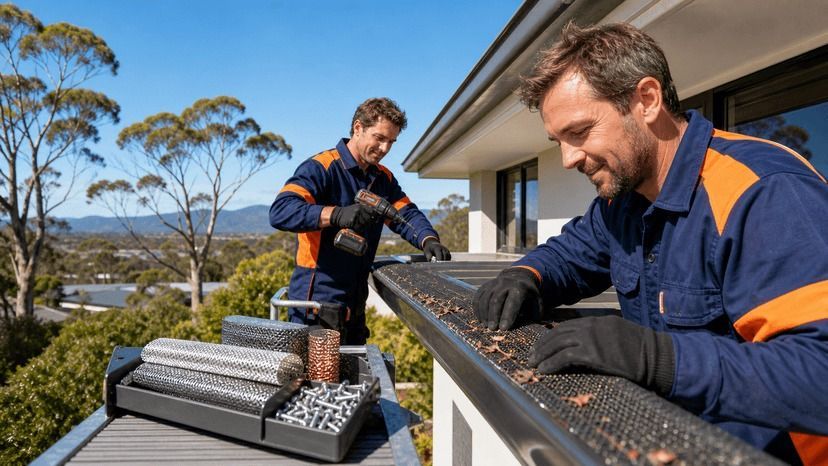
- Full‑length aluminium gutter guard installed, fixed to both roof and gutter.
- Ember‑protection mesh integrated where needed, to keep fine debris and embers out.
- Colour and profile selected to blend with the existing roof so the front‑of‑street appearance was preserved.
After (Improved State)
- In a storm, water now flows cleanly into the downpipes instead of over the edge.
- Leaves slide off the mesh rather than sitting inside the gutter.
- The roofline appears crisp, even and tidy from the street.
- Insurance inspections are more straightforward, with gutters clearly protected and accessible where needed.
- Ladder climbs and emergency clean‑ups in heavy rain are largely eliminated.
Case Study 2: Launceston Family Home with Solar
Side‑by‑Side View
Before (Problem State)
- Pigeons nested under the solar panels, bringing sticks and droppings that stained the roof.
- Moss and leaf build‑up around panel mounts and in gutters reduced solar efficiency.
- Extra weight and moisture increased wear on the roof surface.
- From the street, the roof looked patchy and dirty with visible nests.
Solution Implemented
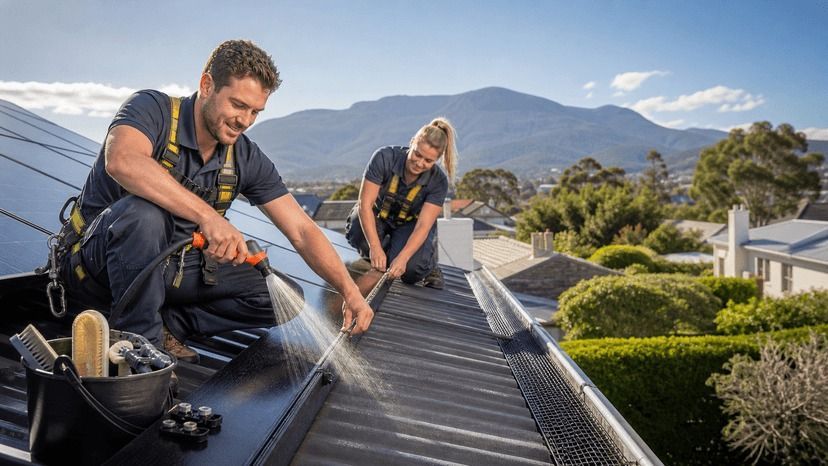
- Purpose‑designed bird‑proofing and solar panel mesh fitted around panel edges.
- Matching gutter guard installed along the eaves to stop more debris settling at the base of the roof.
- Mesh specified to suit both the solar configuration and local debris pattern.
After (Improved State)
- Clear side‑by‑side difference compared to old photos: the dirty roof with nests and dark patches becomes a clean, even surface.
- Panels sit within a secure, meshed boundary with no access points for birds.
- Gutter lines are straight and clear, with no visible clumps of debris.
- The solar system can work closer to its potential, and the constant noise and mess from birds is greatly reduced.
In both kinds of homes, a one‑off installation replaces years of risky ladder climbs, emergency clean‑ups during storms, and repeat repair work on fascia boards and internal ceilings.
Asset Protection Versus Endless Cleaning Costs
When we look at the whole roof system, the comparison changes from "clean now or later" to "protect now or repair later".
Ongoing Cleaning (Maintenance‑Only Approach)
- Regular paid cleaning visits through autumn and winter
- Extra visits after big winds or storms
- Ongoing risk of missed blockages between visits
- Continued exposure of fascia, roof edges and internal linings to overflow
Integrated Leaf Guard (Asset‑Protection Approach)
- Once‑off professional installation of a quality guard system
- Occasional checks and light maintenance only
- Consistent protection of roof edges, fascias and wall cavities
- Reduced likelihood of emergency callouts and internal damage
High‑quality leaf guard systems in Tasmania support the whole structure by:
- Helping keep roof sheeting drier at the edges
- Reducing long‑term moisture on fascia boards
- Limiting water from getting into insulation and wall cavities
- Protecting internal plaster from repeat leaks and stains
This slows down general wear, supporting the value of the dwelling as a whole. From an insurance point of view, well‑protected gutters lower the risk of storm overflow claims. In bushfire‑prone areas, the right ember guards add another layer of protection. For landlords, fewer emergency callouts and fewer roof issues between tenancies make ongoing management easier.
A simple problem/solution explainer video could use this structure:
Problem: Multiple paid cleanings each year, recurring leaks, and slow damage to fascias and ceilings.
Solution: One-time installation of an ember‑rated metal mesh system, followed by minimal maintenance and fewer repairs over the life of the roof.
Roof & Gutter Safety Checklist for Tasmanian Homeowners
Roof and ladder work can be risky, especially in Tasmanian weather. Use this simple checklist before you do anything yourself.
Part 1: When Not to Get on the Roof
[ ] The roof surface is completely dry (if NO, do not climb).
[ ] There is no ice, frost or visible moisture on the roof (if NO, do not climb).
[ ] Wind conditions are calm to light (if strong winds or a storm warning, do not climb).
[ ] The roof pitch is gentle enough for safe access with proper gear (if steep and you lack harnesses and anchors, do not climb).
[ ] Someone else is at home and knows you are using a ladder (if NO, do not work alone).
Part 2: Ground‑Level Condition Check (Problem State Indicators)
Walk around your home and check from ground level.
[ ] Gutters do NOT overflow or drip heavily during rain (overflow indicates a problem).
[ ] No visible sagging sections along the gutter line.
[ ] No rust streaks down walls from gutter or roof edges.
[ ] No birds, possums or vermin regularly entering or exiting near the roofline.
[ ] No plants, moss or small shrubs growing in gutters.
[ ] Existing guards look flat and secure, not lifting, cracked or pulling away from the roof.
Part 3: Visual "Before & After" Reference
Healthy / Improved State (What You Want to See)
- Straight, even gutter lines with no dips.
- Clean mesh or gutter tops with only light, loose debris that blows or washes away.
- No dark streaks down the fascia or wall.
- No animal activity around solar panels or under roof edges.
Problem State (Signals to Take Action)
- Uneven lines, drooping sections or obvious low points in the gutter.
- Visible clumps of leaves, sticks or nesting materials.
- Dirty streaks or rust lines down fascia boards.
- Birds, possums or vermin repeatedly accessing the roof cavity.
By treating gutter and ember guards as an investment in your roof and a safety upgrade for the whole household, you reduce the need for risky climbs, late‑night emergencies in heavy rain and stressful clean‑ups after high‑wind or ember events. Investing in the right system now helps protect one of your most important assets for years to come.
Protect Your Home With Reliable, Low-Maintenance Gutter Protection
If you are ready to stop spending weekends clearing blocked gutters, our tailored
Leaf guard systems in Tasmania are designed to suit local conditions and roof types. At Hobart Gutter Guard Co, we focus on long-term solutions that reduce maintenance and help protect your home from water damage. Get in touch today to request a free measure and quote, or
contact us to ask any questions before you book.




Get a Free Measure and Quote
- No More Cleaning Blocked Gutters
- Keep Out Birds, Leaves & Debris (100% Bird Proof Gutters)
- Protect Your Gutters & Home From Costly Water Damage and Fire Threats
- Gutter Guard & Ember Guard
- Free Gutter and Solar Panel Clean With New Installs