
Hobart Gutter Guard Co Blog
Solar Skirting Maintenance in Hobart: Inspections, Cleaning, and Replacement
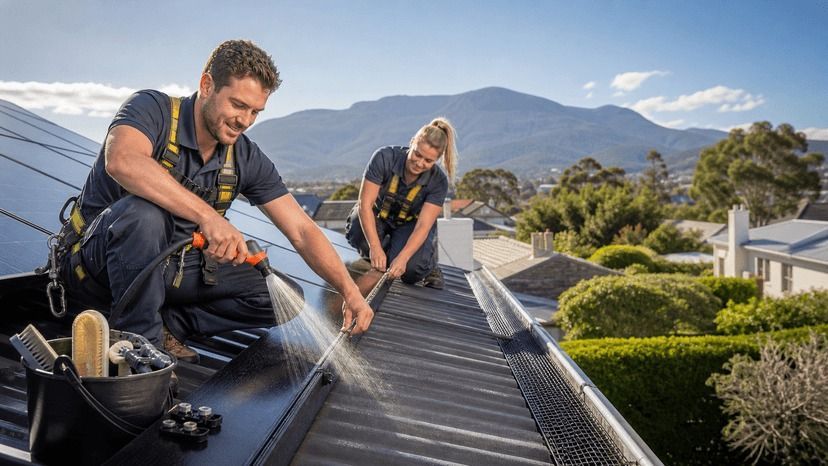
Protect Your Solar Investment Before Next Bushfire Season
Solar panels are a major long‑term asset for your home, just like the roof and gutters that support them. If the skirting around your panels is loose, damaged or missing, you are leaving that investment open to birds, embers and water. A simple protection plan for solar panel skirting in Hobart can safeguard your panels, your roof structure and your ceiling from slow, hidden damage that can reduce system performance and property value.
Late winter in Hobart is a smart time to think about solar and roof protection. The wild summer winds and fire warnings have not started, but we have already seen what the winter rain and cold can do. By checking your skirting and gutters now, you avoid rushed repairs later. It is less about cleaning for the sake of it and more about guarding a major home asset so it stays efficient and keeps adding value to your property.
Solar skirting, ember guards, gutter guards and gutters all work together as a low‑cost form of risk mitigation. They help stop birds and possums nesting under arrays, they block leaf litter that can trap embers, and they move water off your roof where it belongs. As a Tasmanian-owned specialist, we work with local conditions like salty air, gum leaves and noisy neighbourhood birds every day, so we know how quickly things can change on a Hobart roof.
Before & After Case Study: What Neglected Solar Skirting Really Costs
To show how skirting affects your solar investment, it helps to look at a clear before‑and‑after example from a typical Hobart home.
Before: Unprotected Panels and Roof
On an eastern shore property, the roof started to show the classic warning signs of neglected solar skirting:
- Gaps between panels and roof where pigeons and starlings slipped in
- Nests, droppings and feathers packed around mounting feet
- Leaves banked up against rails and brackets, holding moisture
- Blocked gutters, stained fascias and damp roof timbers nearby
On the surface it just looked messy, but the hidden costs were building:
- Moisture around wiring increased the risk of electrical issues
- Wet insulation under the roof lost thermal performance
- Timber stayed damp for longer and began to soften and rot
- Shade, dirt and nesting material reduced solar output and payback
The owners also reported dripping eaves every winter and birds flapping under the array at first light. A detailed inspection showed:
- Corroded fasteners around the panels
- Torn mesh that had pulled away from the roof
- Gutters that had started to fail and hold water
- Gaps where wind‑blown embers could easily lodge
In this state, the roof was exposing the solar investment, the building structure and internal finishes to avoidable risk.
After: Integrated Protection for Solar and Roof
Once solar panel skirting in Hobart was set up properly and linked with ember guard mesh and selected gutter replacement, the change was clear:
- Perimeter mesh ran neat and tight, with no sagging or rattling in the wind
- Fasteners sat snug, corrosion‑resistant and correctly tensioned
- Gutters were clear and free-flowing, with no standing water
- The roofline looked tidy from the street, with nowhere for birds to gain a foothold
In the months after the upgrade, the owners saw:
- Fewer moisture issues around the system and roof framing
- More stable solar output due to reduced shading and debris
- Reduced risk from ember attack during high‑fire‑danger days
- Less reactive repair work and a stronger long‑term return from the solar system
Side‑by‑Side: Old Vs Upgraded Protection
Problem State
- Light‑gauge mesh sagging and corroded around edges
- Standard fixings staining the roof and loosening after weather events
- Gutters repeatedly overflowing in normal rain
- Regular bird activity under the array and debris build‑up
Improved / Finished Result
- Premium ember‑guard mesh suited to Tasmanian conditions, fitted tight to the roof and panel frame
- Stainless or coated fasteners designed for coastal air and multiple service cycles
- Re‑graded or replaced gutter runs that move water away quickly
- Sealed array perimeter with no access for birds, possums or embers
This side‑by‑side change protects far more than the mesh itself. It supports steady solar output, keeps the roof structure dry, helps ceiling insulation work properly and reduces the chance of internal plaster damage from slow leaks or animal activity.
Seasonal Inspection Checklist for Solar Skirting in Hobart
Treat routine checks as a simple safety and asset‑protection checklist for your roof, rather than a large chore. A good pattern for Hobart homes is a quick visual check every three months and one deeper check in late winter, around July or August, before the windy season ramps up.
From the Ground
, you can often spot early warning signs:
- Mesh that looks wavy, sagging or out of line
- Clips or brackets that have clearly gone missing
- Birds landing on the same panel edge over and over
- Buildup of leaves around panels and in nearby gutters
From a Safe Ladder Position
, with someone spotting you, a closer visual check can reveal:
- Gaps between skirting and roof where light shows through
- Rust or flaking on screws, brackets or mesh edges
- Chew marks that hint at possums or rats testing the mesh
- Cracked tiles or loose sheets near the mounting points
This is also the time to look at the rest of the system around the panels:
- Gutter guards should sit flat and firm, not bowed or loose
- Downpipes should be flowing, with no water marks on fascias or staining down the wall
- Any water tracks or damp patches may indicate a blockage higher up that needs attention
A simple look from the ground is fine for spotting obvious problems, but once you see damage, movement or signs of pests, it is safer and smarter to get a professional roof and skirting inspection. That way you avoid breaking tiles, disturbing mounting hardware or doing anything that might affect panel warranties.
Safe Servicing Guide to Protect Panels, Roof, and Gutters
Roof work around solar and skirting is not just another house job. Many Hobart homes are two-storey, on a slope or have a steep, sometimes mossy roof. That mix makes DIY risky. Licensed, insured technicians have the gear and the training to move around safely and to work without stressing your panels or roof sheets.
Common Problems
- Debris trapped around skirting and mesh
- Gutters and downpipes partially blocked with fine ash and leaf litter
- Loose or under‑tensioned mesh and fasteners
- Hidden roof defects near mounting points
Professional Solutions
A typical protection service around solar skirting usually follows a careful pattern:
- Isolate the solar array as required and set up safe access
- Clear loose debris from skirting and mesh by hand, rather than by kicking or dragging
- Flush gutters and downpipes to move leaves, grit and fine ash away from the house
- Check and re‑tension mesh and fasteners so gaps are closed and fixings remain secure
- Note any damaged gutters, cracked tiles or shifting brackets for targeted repair or replacement
After a thorough winter service, the change can be dramatic. Where there were clogged gutters, overflowing corners and leaf‑choked skirting, there is now clear water flow and firm mesh. Fascias that were stained start to dry out, and the roofline has a neat, finished look that is better prepared for spring storms, summer heat and the dry, windy days when embers are more of a risk.
Technical Explainer: When to Replace Mesh, Fasteners, or Gutters
Not every issue calls for a full upgrade. The key is knowing when basic debris removal is enough and when worn components are putting your whole roof and solar system at risk.
When Service Is Usually Enough
- Mesh is intact, with no holes or splits
- Fasteners are solid, with no movement or rust streaks
- There is only loose debris sitting on top of the skirting or in gutters
When to Replace Mesh or Clips
- Rust spots are eating into metal edges
- UV‑brittled plastic clips crumble when touched
- Visible holes or stretched sections move in the wind
- Clear signs that birds have squeezed through or lifted mesh
When to Consider Gutter Replacement
Sometimes the weakest link is the gutter itself. It may be time to replace gutter runs when you notice:
- Warped or twisted lengths that hold water
- Constant overflow in normal rain, even after debris is cleared
- Flaking paint and internal rust visible from below
- Sagging sections that pull away from fascias or skirting
Side‑by‑side, old light‑gauge mesh that has sagged and corroded looks loose and patchy compared with premium ember‑guard mesh suited to Tasmanian conditions. The same contrast shows up in the fixings: corroded screws and brackets stain the roof and fail early, while stainless or coated fasteners are built to handle multiple service cycles and coastal air.
Timely replacement of the weakest components helps protect the entire system. It supports steady solar output over the life of the array, keeps the roof structure dry, helps ceiling insulation perform as specified and reduces the chance of internal damage from slow leaks or animal activity. Addressing issues early usually works out better than relying on stop‑gap fixes that never quite solve the problem.
Lock in a Yearly Solar and Gutter Protection Plan
The best protection comes when solar panel skirting, ember guards, gutter guards and gutters all work as one system. A simple yearly plan that fits local weather patterns keeps that system in good shape without you having to think about it every month.
A practical rhythm for many Hobart homes looks like this:
- This winter, around July or August, book a full inspection and professional service, repair or replace any damaged mesh and fasteners, and check whether any gutter runs are due for upgrade
- Before summer, around October or November, arrange a quick check for new bird activity, fresh debris or any storm damage around the panels and gutters
- Every 5 to 10 years, review whether panel layout changes, new arrays or roof work call for upgraded skirting or adjusted gutter solutions
By treating the whole roof as one connected asset, you keep your solar panels working efficiently, protect the building from water and fire risks, and maintain the look and value of your home. For Hobart properties, where weather can swing from icy rain to dry, windy days in a short time, building this protection into your regular home care helps secure both your solar investment and the structure that supports it.
Protect Your Solar Investment And Restore Peak Performance
If you are ready to stop pests, debris and weather from compromising your panels, we can help with expert
solar panel skirting in Hobart tailored to your roof and system. At Hobart Gutter Guard Co, we assess your setup, recommend the right skirting solution and complete the installation with safety and long-term performance in mind. Reach out to our team today to discuss your panels, get practical advice and book a time that suits you, or simply
contact us to request a quote.


Get a Free Measure and Quote
- No More Cleaning Blocked Gutters
- Keep Out Birds, Leaves & Debris (100% Bird Proof Gutters)
- Protect Your Gutters & Home From Costly Water Damage and Fire Threats
- Gutter Guard & Ember Guard
- Free Gutter and Solar Panel Clean With New Installs